
Every fall, thousands of students arrive on campus with the same small but very real problem: they need a new barber. theCut, the world’s largest barbershop platform, wants to be the first thing they think of when that moment comes. For Back to Campus 2026, theCut teamed up with Fizz to put that idea in front of HBCU students in a way that felt like theirs. The campaign turned a sweepstakes into a school-pride competition across campus feeds, then brought the celebration to Alabama A&M University, the winning campus, with a live Swarm on October 7.
About theCut
theCut is an app for finding, booking and paying a barber. Clients can browse barbers nearby, see their work and reviews, and book a chair in a few taps. Barbers use it to run their business: scheduling, payments and building a client list.
For college students, the timing is everything. A new semester often means a new city, and finding a barber you trust is one of the first things to sort out. theCut’s goal was simple: when a student lands on campus and needs a cut, theCut should be the first app they open.
The challenge
theCut wanted HBCU students to create profiles in the app before the semester got busy. To make that worth doing, it put up a sweepstakes: $10,000 in cash prizes, free haircuts, plus a Coi Leray + BenDaDonnn appearance at the winning school.
A big prize helps, but it isn’t enough on its own. Students see offers all the time. The real question was how to make this one feel like it was about their campus, and how to get them excited enough to sign up and get their friends to do the same.
The approach: make it about their campus
Fizz helped turn the sweepstakes into a competition between schools. Campus power rankings showed which HBCUs were pulling ahead, so every signup visibly moved a school up the board. Copy and calls to action were personalized to each school: Howard students saw a Howard rallying cry, Morgan students saw their rivals’ names. Deadline reminders kept the pressure on as the finish line got closer.
The campaign ran across in-feed ads, Front Door Takeovers and UGC-style placements, each made to look and sound like what students already post on Fizz.
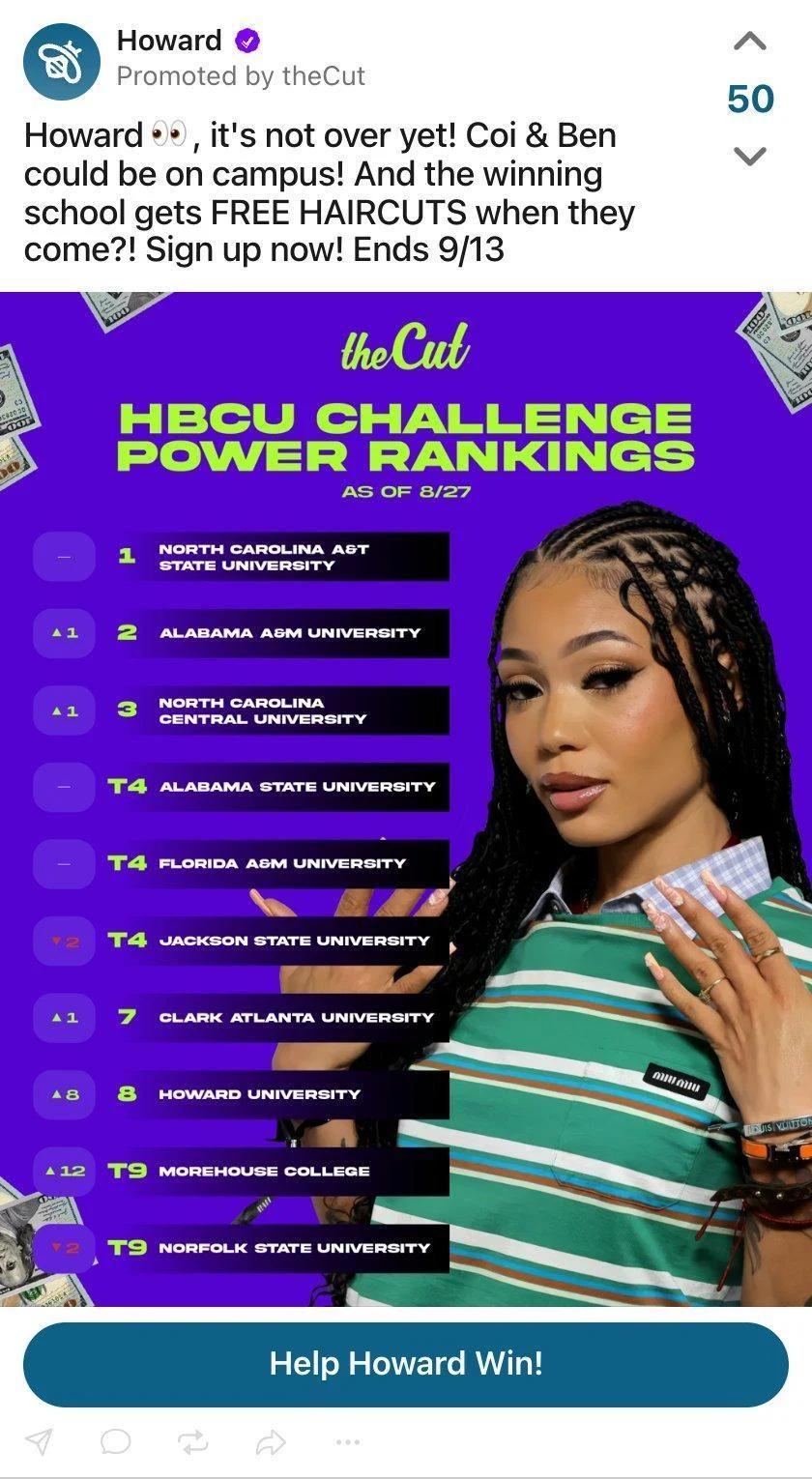
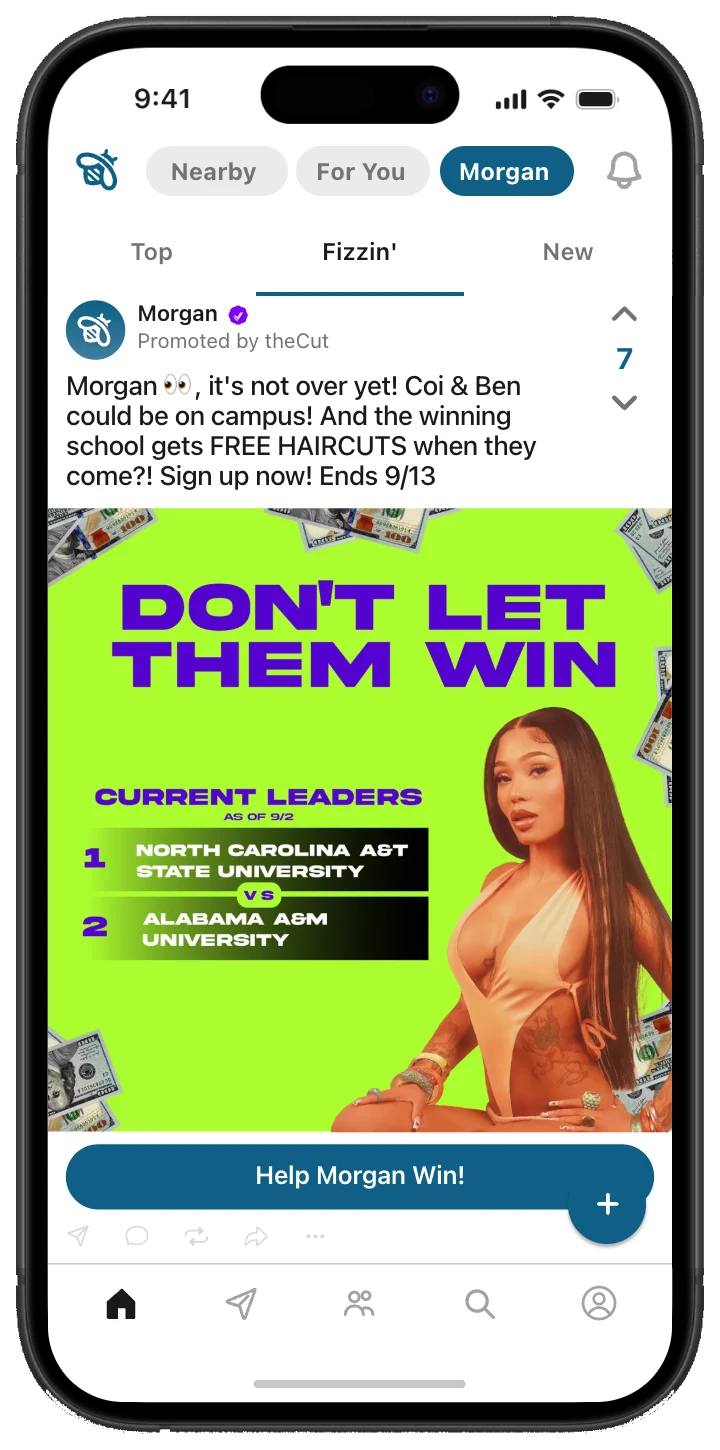
The student-style creative stood out. UGC-style placements drove 50% of media clicks from just 15% of impressions. Their 1.12% CTR was 9.3× the standard in-feed CTR, which made UGC the campaign’s strongest format for clicks. Students responded to ads that sounded like other students.
Main media flight: August 13 – September 13, 2026. CTR comparisons use total clicks divided by total impressions for each format.
How the media formats worked together
The campaign used four formats, each with a different job. Standard in-feed placements kept theCut visible across the full flight. Four Front Door Takeovers concentrated media support on selected dates. Weekly UGC-style placements gave Fizz room to update school rankings and deadline reminders as the competition moved. Added-value in-feed inventory supplied additional delivery.
Together, the mix gave the campaign several ways to say the same thing. A student might first meet the sweepstakes in a standard ad, later see a school rivalry in a native-style post, and get a reminder as the deadline approached. theCut didn’t rely on a single creative treatment for the full month.
FROM THE FEED TO CAMPUS
Bringing the celebration to Alabama A&M
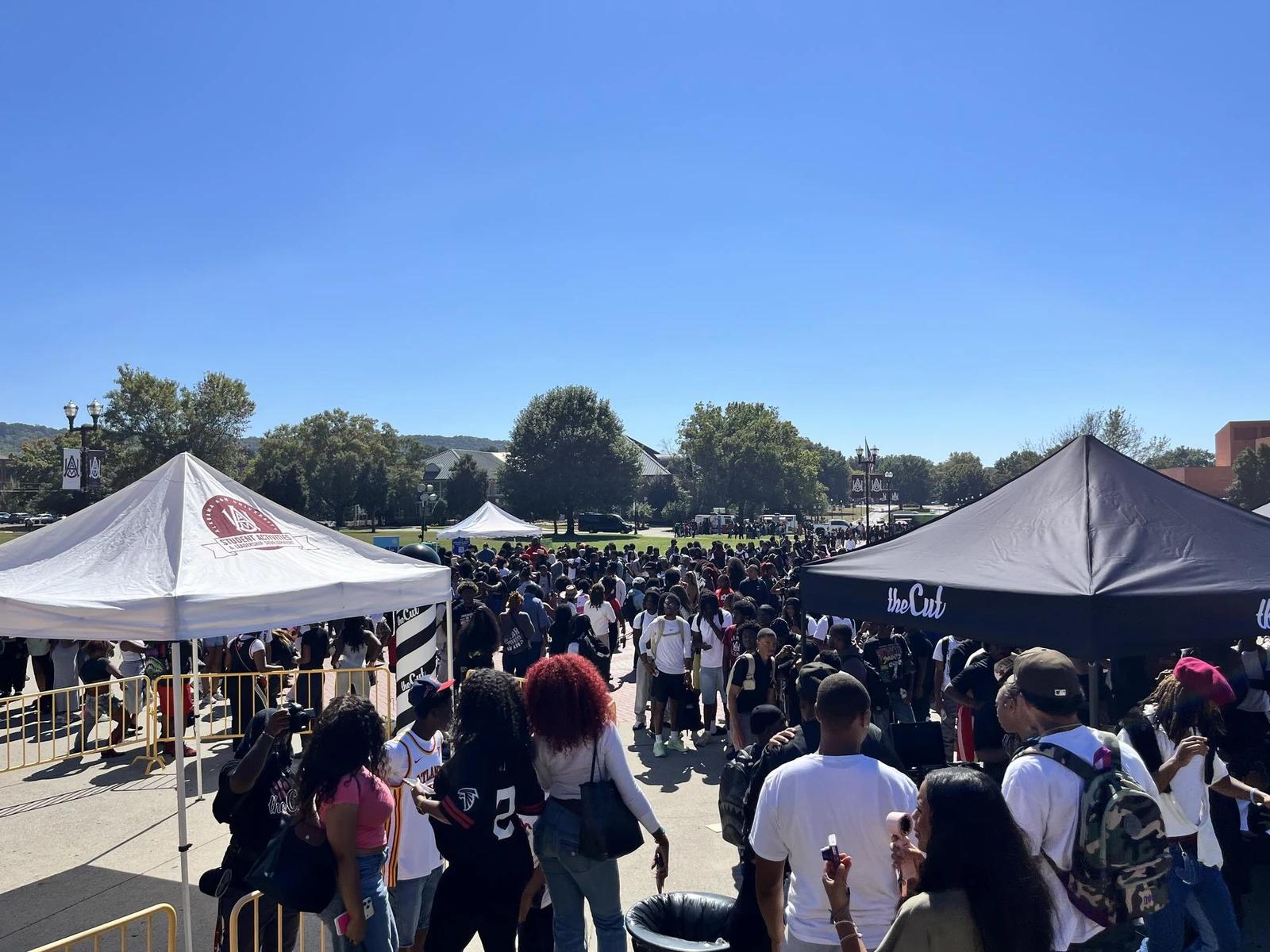
When Alabama A&M won, the prize stopped being a promise on a screen and became a day on campus. Fizz helped coordinate the October 7 Swarm with Coi Leray and BenDaDonnn, and handled the student-facing side: recruitment of student ambassadors, Front Door Takeovers built hype throughout the day of the event, then push notifications told students when to show up and reminded them before it wrapped.
For AAMU students, it was a chance to celebrate a win they had helped earn, one signup at a time. Darrian Cate, Head of Marketing for theCut, shared, “Seeing students come out in swarms—even in the blazing sun—showed the power of tapping into HBCU pride and giving them something to rally around. Beyond bringing Ben and Coi to campus, we provided things students actually need: haircuts, hair products, food and school supplies. The app sign-ups are valuable, but the lasting impression matters even more. We want students to know theCut as the best place to find a barber and a brand that builds community, stays connected to culture and invests in relationships. We plan to build on that even more in 2027.”
A standout moment for signups
The excitement around the event showed up in theCut’s numbers. theCut recorded 583 .edu signups across October 5–7, the lead-up to the Swarm and event day itself. Those were the three highest daily signup counts in the full August 13 – October 9 reporting period, peaking at 221 signups on October 6.
| Metric | Result |
|---|---|
| Signups across October 5–7 | 583 |
| Swarm takeover CTR | 0.81% |
| Organic student posts reported | 25+ |
Swarm takeovers delivered 8,890 impressions and 72 clicks. Students also posted about the experience on Fizz on their own, so the campaign kept running in campus conversations after the event ended.
How advertisers can apply this campaign model
The campaign points to a few planning principles for brands looking to reach students.
Start with a reason for a campus to care. theCut’s sweepstakes tied profile creation to school pride and a shared reward. Make the desired action relevant to the community, not only to the brand.
Give each school a recognizable message. Campus names, rankings and school-specific calls to action made the offer feel local. Pair that creative work with a defined audience and media formats that serve different campaign moments.
Plan to learn during the flight. Fizz used creative results to narrow the active in-feed assets and shift investment into UGC-style placements. Keep room in the plan to respond to what performance shows.
Connect media to a real-world moment when the concept supports it. Here, the winning campus got a live celebration while digital placements helped support the activation. Event scope and media support can be defined together around the advertiser’s objective.
The takeaway
The campaign gave students a reason to care: a chance to put their school on top. School-by-school competition made theCut’s offer feel local, student-style creative earned the most clicks, and the Swarm turned an online win into a shared campus moment. theCut didn’t just reach HBCU students. It became part of a story they told about their own campus, right as they were settling in and looking for a barber.
Sources: theCut × Fizz media and Swarm wrap report; theCut daily signup export. Swarm media results are separate from the main media flight.